Here is what nobody puts in a boot review. The boot is rarely the thing that ruins a Saturday. In February I took my granddaughter Hattie to Mammoth Cave in a pair of old sneakers, with a leaky plastic bottle rolling around in my tote bag and a thin poncho that tore on a branch. She got wet socks. She got a blister on her left heel. She asked me for water every ten minutes and I kept telling her we would stop in a minute. We turned back after about a mile and drove home with the heater running the whole way.
That night I sat at my kitchen table and ordered five things in one Amazon order. The Merrell Chameleon 7 Mid A/C was second on the list. Hattie has worn them on about thirty Saturdays since, starting the first Saturday of March, through a wet spring, a hot summer and now into fall. They have been on wet limestone at Mammoth Cave and on the flat walking paths at Lost River Cave in town. This is not a review assembled from a product photograph and a listing page. It is what I noticed, including the parts that are not flattering.
The Quick Verdict
She fastens them herself, which ended a small daily argument. They are heavier than sneakers, and the tread holds clay until you scrub it.
Amazon Check Today's Price →The closure she could work on the very first morning
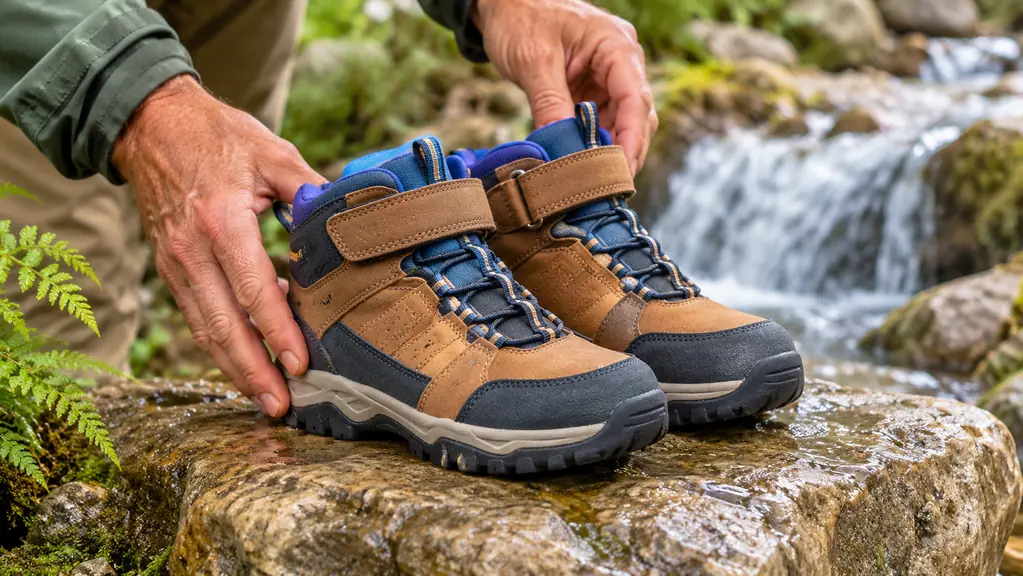
Waterproof, ankle high, and held on with a hook-and-loop strap plus a bungee lace instead of a wet knot. For a child who cannot tie a shoe reliably, that is the whole argument.
Amazon Check Today's Price on Amazon →How These Boots Have Actually Been Used
One pair, size 2, bought with about a thumb's width of room at the toe and worn with a single pair of wool blend socks. They live on a mat by my back door and they go on for walks. That is all they do. They have never been to school, never been worn to the grocery store, never been handed down to anybody. Before the first Saturday in March, Hattie broke them in with two short walks around my neighborhood in Bowling Green, and that was the whole of it. No blister. The left heel blister from the sneakers has not come back, and I have watched that heel closely every Saturday since, because I am the one who felt responsible for it in the first place.
The first long walk was that first Saturday of March at Mammoth Cave, two miles or so, cool and damp, with the kind of fog that sits on the boardwalk and does not lift until noon. I expected a complaint about the weight and I got one, about a quarter mile in, and then she forgot about it because a pileated woodpecker went over our heads and she had to stop and find it. The boots were not the thing she remembered from that morning. That is about the highest compliment I can give a piece of children's gear.
Since then they have done roughly thirty Saturdays, walks of two to three miles, with one four mile day in June that I would not repeat in July heat. They have been through spring mud, a dry summer that turned the trails to powder, and the first cool mornings of fall. The leather upper has scuffed across the round toe and along the outer edge of the right boot, where she drags her foot when she is tired. Scuffed is not worn out. The stitching has held, the rubber sole has not separated from the upper, and the ankle collar has not collapsed or gone soft the way the collar on her old sneakers did.
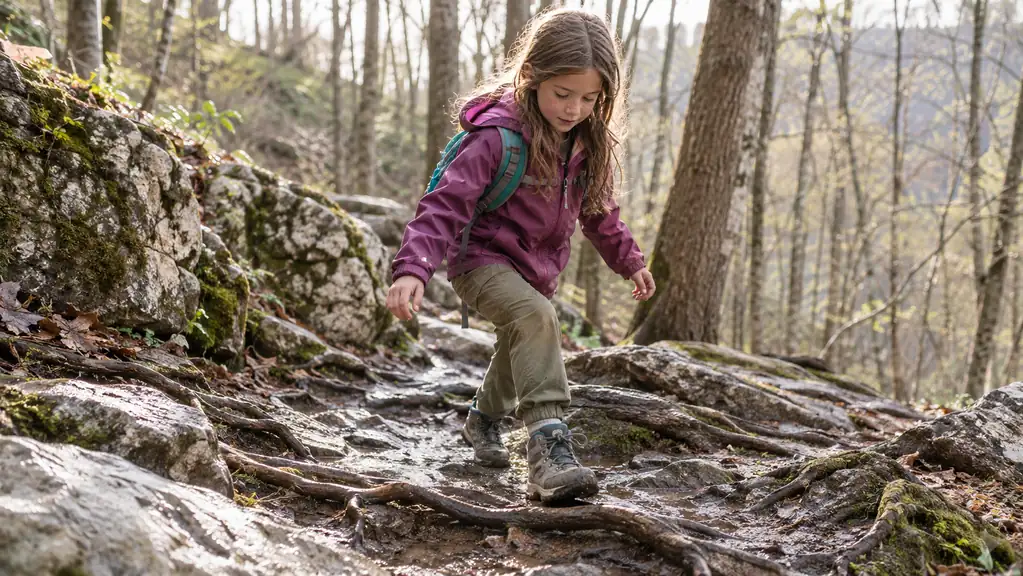
What I did not expect was how much the ankle height would matter on roots. The Chameleon is ankle high, listed at a four inch shaft circumference, and that is not a tall boot, so I assumed it was mostly decoration. It is not. On the sections where the roots cross the trail in a ladder, her foot stays where she puts it instead of rolling off the side of a root. She is not a careful child by nature. She is a child who runs downhill because downhill is faster. The boot gives her a little margin she does not know she is using, and I am glad of it.
What Nobody Tells You About Fit
Nobody tells you that the boot you buy in March is not the boot you own in October. Not because it breaks down, but because the child inside it grows. I bought the size 2 with a thumb's width at the toe, which is what I would tell any parent or grandparent to do, and by the end of summer there was about half a thumb left. She will need the next size by spring. That is not a fault of the Merrell Chameleon. It is the arithmetic of an eight year old, and it means a boot like this is a two season purchase at best, not a three year investment.
The temptation is to buy big and let her grow into it. I understand the temptation because I have felt it in a shoe store with a child pulling at my sleeve. I would resist it. A boot that is a size and a half too long is a boot a child clomps in, and clomping on wet limestone is how you end up carrying somebody back to the car. Half a thumb, plus room for a wool sock, is the compromise I would make again. It is enough room for a season of growing without so much slack that she cannot feel where her feet are on uneven ground.
The other thing nobody mentions is that the insole is listed as EVA or memory foam depending on the listing you read, and that padding does compress over months of use. I noticed it around the middle of summer, not because she complained but because I put my hand inside a boot to check for a stone and felt that the heel bed had taken the shape of her heel. I do not consider that a defect. I consider it what a foam insole does. If you want a boot that feels brand new in October, you will not get that from any insole at this level, and you should plan on replacing the insole before you replace the boot.
The boot that fit in March fits differently by October. That is not a defect in the boot. It is the arithmetic of an eight year old, and it belongs in the review.
Grip on Wet Rock, and Where It Stops Helping
Here is the part I can speak to with some authority, because Mammoth Cave in spring is wet. Wet limestone is slick as a dinner plate. So are tree roots, and so is a boardwalk when the fog has been sitting on it since dawn. She walks up the rock steps now without reaching back for my hand, and she did not do that in the sneakers. The rubber sole grips. I cannot tell you it grips better than some other boot I have never tried, because I have not tried one and I will not pretend otherwise. I can tell you that the places she used to slide, she no longer slides.
Where it stops helping is clay. Kentucky clay is not mud in the ordinary sense. It is a paste that fills the spaces in a tread and stays there, and it turns a hiking boot into a slick shoe in about fifty yards of trail. I have scraped these boots with a stick and brushed them with an old dish brush more times than I can count. Every tread pattern I have ever met has this problem, so I do not hold it against Merrell. I do hold it against any review that leaves it out, because it is the thing you will actually be doing on a Sunday afternoon.
The other limit was water. Waterproof is a claim worth testing and I did not test it on purpose. In May she went into a creek crossing that was deeper than either of us estimated, and the water came over the top of the boot. No boot in the world stays dry when the water goes over the collar, and I want to be honest about which thing failed. We poured them out, stuffed them with newspaper, and they were dry by the next morning. Her socks were wet for about twenty minutes and she thought the whole thing was funny. I did not.
How I Clean Them, Because You Will Have To
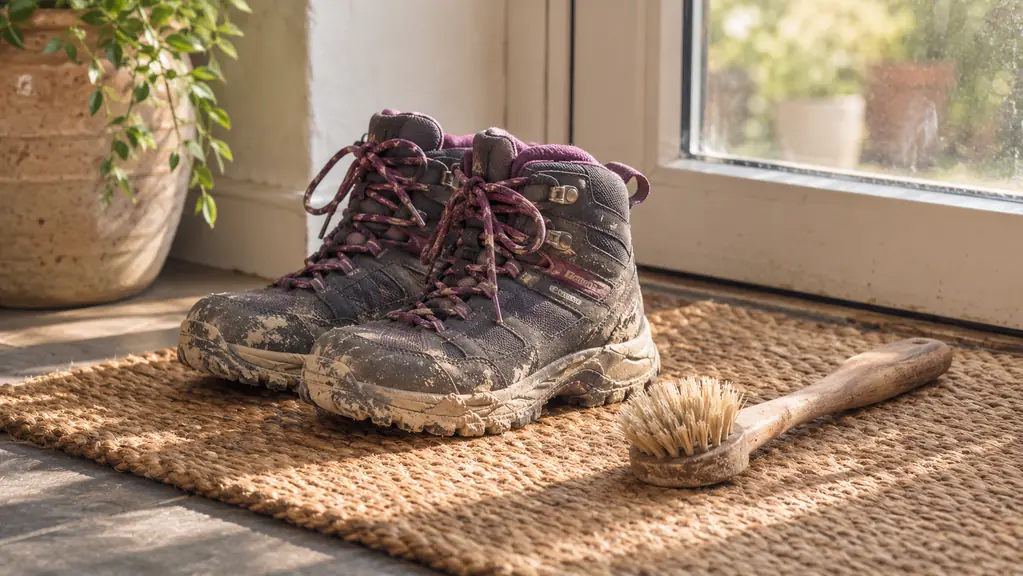
The routine at my house is dull and it works. Boots come off on the mat by the back door. While they are still damp I knock the worst of the clay out of the tread with a stick, then go over them with a stiff brush, working from the heel forward so the mud comes out instead of packing deeper. I do not run them under a tap and I do not leave them on a radiator. They dry in the mudroom with the newspaper inside and the strap left open, and by morning they are ready for the next Saturday.
Twice this summer I let them sit dirty for a week and I regretted it both times, because the clay sets like a plaster and takes three times as long to get out. That is not the boot's fault. It is mine. If there is one piece of practical advice I would give a grandparent buying these, it is to put a brush by the door the same day the boots arrive, and to accept that a wet spring will mean a dirty car floor no matter what you do about it.
The Closure, Which Is the Reason I Would Buy Them Again
I want to be plain about why this boot earned a permanent place at my back door. It is not the sole and it is not the leather. It is the hook-and-loop strap and the bungee lace. Hattie was doing them up by herself on the first morning. She was eight and she could not tie a shoe reliably, and a wet knot on a cold morning is its own small misery that I remember well from thirty one years of classroom lineups. With a strap she pulls, presses and is done. That ended a daily negotiation and gave her one more thing she does without me standing over her.
A bungee does stretch out over months and needs a tug to sit right again, so this is not a forever closure. But it has not failed, it has not come undone mid walk, and it has not filled with grit the way an eyelet full of clay does. For a child in the five to twelve range I would weigh the closure heavily when you compare boots. It is the difference between a boot a child wears and a boot a child waits for an adult to fasten, and on a cold morning that difference decides whether you go at all.
What I Liked
- The strap and bungee let a child fasten the boot alone from the first morning
- Rubber sole held on wet limestone, roots and a foggy boardwalk
- Waterproof upper survived a creek over the top with an overnight newspaper dry
- Leather upper scuffed but did not tear over about thirty Saturdays
- Ankle height steadies a careless child on roots without rubbing the collar
Where It Falls Short
- Noticeably heavier than sneakers, and she mentioned it for the first week
- Clay packs the tread and needs a brush after every wet walk
- She will need the next size by spring
- The bungee needs an occasional tug to sit right again
- Too much boot for pavement and playground use
What I Would Change if I Were Merrell
Two things. First, the weight. She is eight and small for eight, and this boot is heavier than the sneakers she came out of. It was a week of complaint and then it stopped, and I would not trade the protection for a lighter boot on wet rock. But a lighter version of this same boot would be an easier sell to a reluctant walker, and reluctant walkers are most of them at some point. If your child is on the small side, have them try the boot on in person before you commit to a long trail with it.
Second, I would put a scraper in the box. That is a small joke and also not a joke. The tread on this boot is deep enough to hold a Kentucky hillside, which is exactly the point of it, and the consequence is that you will be standing at your back door with a dish brush at seven in the evening. A cheap plastic scraper would have saved me a good deal of scrubbing and would cost the company almost nothing to include. That is a quibble, not a complaint. It is the sort of note I would have written on the back of a receipt if the boot had been bought in a store.
The Rating, and What It Cannot Tell You
The listing shows 4.6 stars across more than 3,100 ratings, and I understand why it lands there. What a star rating cannot tell you is which of those people bought for a child who grows slowly and which bought for a child who grows fast, or whether anyone else spent a Sunday morning with a brush. It also cannot tell you the thing I keep coming back to, which is that the fit is a moving target and the boot is not. Read the ratings, then read the sizing advice from a person who has actually had a child in them for a season, and then buy the size that fits this spring.
Who This Is For
This boot is for the child who is walking two to four miles on real ground and who wants to put her own boots on. It suits a family that goes out in wet weather on purpose and does not mind a brush by the door. If your Saturdays look like mine, one grandmother, one eight year old, an older silver Forester, forty minutes to Mammoth Cave, then this is the boot I would buy again, in the next size up, in the spring, without opening another tab.
It is also for the child who has graduated out of sneakers on the trail but is not ready for a tall boot. The ankle height is the middle ground. It gives a little support on roots and rock without the stiffness of a boot that comes up the calf, and it does not need breaking in beyond a couple of short walks around the block. Two walks was all it took at my house, and the blister we were trying to avoid never showed up.
Who Should Skip It
Skip it if the walking is mostly pavement and playground. The Merrell Chameleon is heavier than your child needs and the tread is wasted on a sidewalk. Skip it if you have a child who will only wear a slip on shoe, because this is not one and no amount of persuasion will make it one. And skip it if you are hoping for a boot that lasts three winters. Buy the size that fits this spring, expect to buy again next year, and keep a brush by the door instead of wishing the fit would hold on its own.
If you are buying for this spring, buy the size that fits now
Ankle high, waterproof, strap and bungee so she can do them herself, and a rubber sole that holds on wet rock. She will outgrow them before she wears them out, and that is the honest math.
Amazon Check Today's Price on Amazon →That is the whole of it. The boots did not make my granddaughter a hiker. Thirty Saturdays did that, and a woodpecker, and a spiral notebook where she writes down what she sees. The boots just stopped being the reason we came home early, and for a grandmother with a husband waiting at home in Bowling Green with a bad knee and a pot of coffee, that was worth the order.