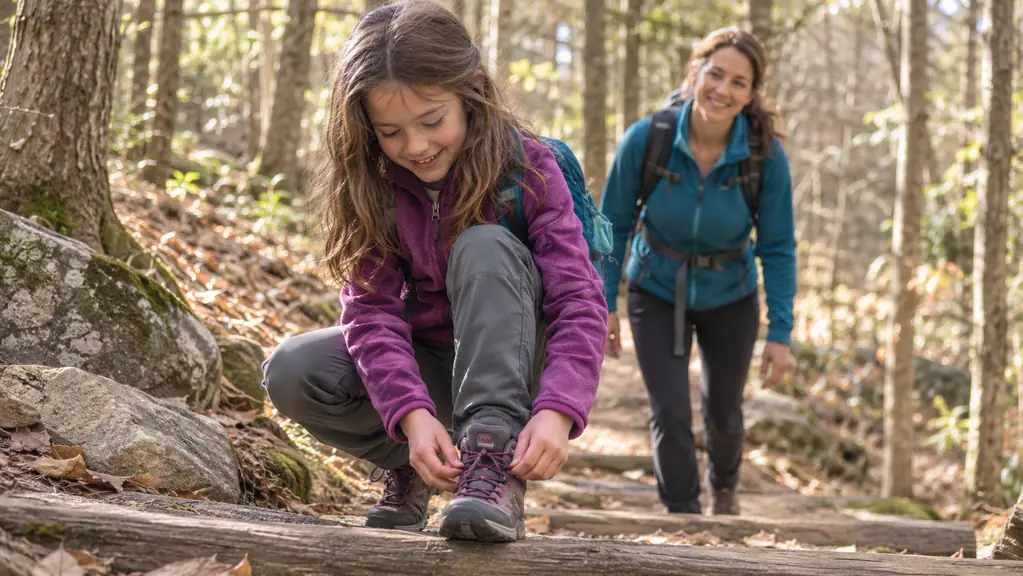
Last February I took my granddaughter Hattie to Mammoth Cave in old sneakers. She was eight then, and we made it about a mile before her socks were wet, a blister was rising on her left heel, and she had asked me for water four times. I had a leaky plastic bottle in my tote and a thin poncho that tore on a branch. We turned back. That night I ordered the Merrell Chameleon boots along with a pack, a pair of binoculars, a bottle and a rain jacket, all in one order. The boots arrived that week. They have been on every Saturday walk since the first Saturday of March.
I am not a gear reviewer. I taught elementary school science for thirty-one years, and I spent a lot of that time watching children get uncomfortable outdoors for reasons adults could have prevented. A wet sock is one of those reasons. A blister is another. This is what about eight months of trail wear has shown me, what has held up, and who I would hand these boots to.
The Quick Verdict
A supportive, waterproof kids boot that Hattie fastened herself from the first day. Heavier than sneakers and a mud trap in clay, but the grip and the dry feet changed our Saturdays.
Amazon Check Today's Price →The boots that ended our wet-sock turnarounds
These are the Merrell Chameleon boots Hattie has worn for about thirty Saturday walks since March, through wet spring, hot summer and cool fall. They are ankle high, waterproof, and she can do the strap and bungee herself. Check the current sizing on Amazon before you order.
Amazon Check Sizing on Amazon →How I've Used It
These boots have one job in our week. They go on Hattie's feet on Saturday morning, and they come off on the mat by my back door. She does not wear them to school, to the store, or in the yard. That is not a knock on the boots. It is how I know what they can do on a trail, and what they cannot do on a sidewalk.
Most of our walks are two to three miles at Mammoth Cave National Park, about forty minutes from our house in Bowling Green. The longest we have done is four miles. We also walk the paths at Lost River Cave here in town. Hattie is eight, in third grade, and she has done about thirty Saturdays in these boots since the first Saturday of March. Spring was wet, summer was hot, and fall has been cool and dry. The boots have seen all of it.
Before that first March walk, the February trip was the comparison. Old sneakers, cotton socks, a leaky bottle, a poncho that tore. Hattie was not being difficult. She was wet and uncomfortable, and she was eight. The boots did not fix her mood by themselves. But they removed the wet socks and the stopping to ask for water, and that was enough to get us back on the trail the next Saturday.
The boots are not the only thing in the pack. Hattie carries a small hydration pack with water, the rain jacket, binoculars and her nature journal. The boots are the foundation. If her feet are wet or sliding, the rest of it does not matter. On the walks where the trail was muddy, the boots were the difference between a child who kept walking and a child who wanted to go back to the car.
The Fit and the Break-In
I bought her size 2 with about a thumb's width at the toe, which is how I was taught to fit children's shoes when I was teaching. She wears one pair of wool blend socks. Eight months later there is about half a thumb left. She will need the next size by spring. That is normal for a child her age, and it is the main reason I would not spend a lot of mental energy on a boot she will outgrow.
Two short walks around our neighborhood were all the break-in these boots needed. No blister. The left heel blister from the February sneakers had healed by then, and it never came back. I watched for it on every walk for the first month, because that is the spot that worries me. By April I had stopped checking. That is the highest compliment I can give a children's boot.
The closure is a hook-and-loop strap with a bungee lace. Hattie could do it herself from the first day. That matters more than it sounds. On a cold morning, when everyone is standing in the driveway waiting, a boot a child can fasten without help is a boot that gets worn. The strap also let me snug the ankle without cranking the laces, which is the part I fussed with on her old sneakers.
The boot is ankle high, with a shaft circumference the listing gives as 4 inches. The upper is leather with synthetic material, the sole is rubber, and the toe is round. I am not going to pretend I measured her foot against a chart. I can tell you that the boot came up over her ankle without rubbing, and that she never once complained about the top edge digging in. The lining is fabric. It has not balled up at the heel.
Grip, Waterproofing, and the Places It Mattered
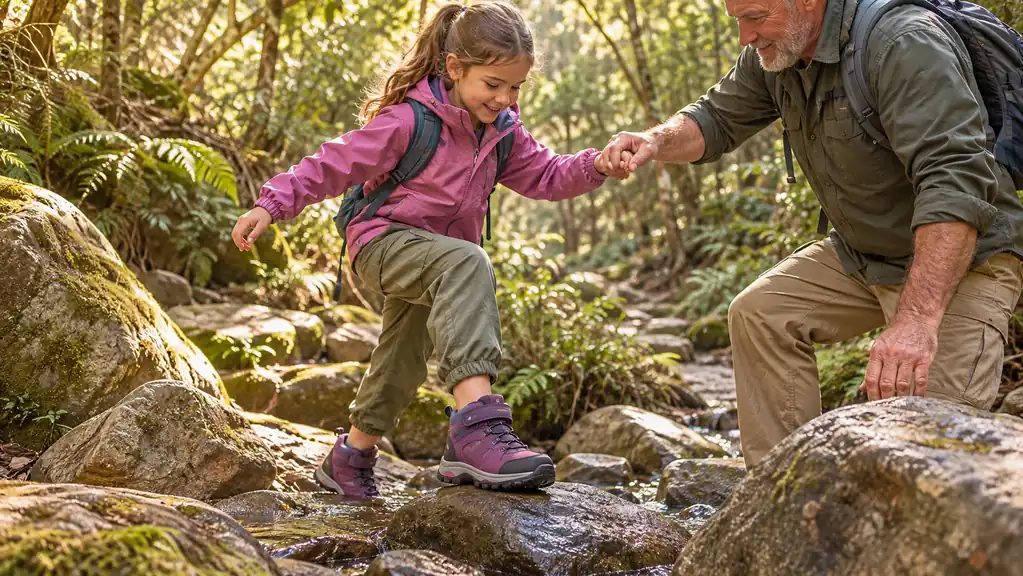
The trails at Mammoth Cave are not alpine. They are packed dirt, wet limestone, roots and the occasional shallow creek. That is exactly the kind of ground where a sneaker fails quietly. On wet limestone the rubber sole held. Hattie is not a cautious child, and I did not see her slide on the rock slabs the way she did in her old shoes. She walked with her usual hurry.
The waterproofing is the part I tested by accident. In May we came to a creek crossing that was higher than I expected. The water went over the top of one boot. She did not complain, and we finished the walk. That night I stuffed both boots with newspaper and set them by the register. They were dry by morning. I would not make a habit of it. A waterproof boot is not a wading boot, and the listing only says waterproof, not submersible.
Ordinary wet mornings were easier. Wet grass, puddles, drizzle. Her socks stayed dry. That was the whole point of replacing the sneakers. The February walk was not a rare event. It was a normal wet Saturday, and the normal wet Saturday is what these boots fixed. I do not need them to survive a river. I need them to survive the walk we actually take.
At Lost River Cave the paths are easier, and the boots are almost more than she needs. That is fine. I would rather have one pair that works on the harder day and is a little heavy on the easy day than two pairs to keep track of. The Lost River walks are where the bottle and the binoculars get used. The boots just come along.
The left heel blister from the February sneakers never came back. That is the line I would put on the box.
The Weight, the Mud, and the One Wet Day
These boots are heavier than sneakers. Hattie noticed it on the first walk and said so. She was used to thin soles and mesh, and a leather boot with a rubber sole felt different. By the third Saturday she had stopped mentioning it. I would not put a five-year-old in these for a flat paved path. For a two-mile trail with roots and rock, the weight is the trade for support.
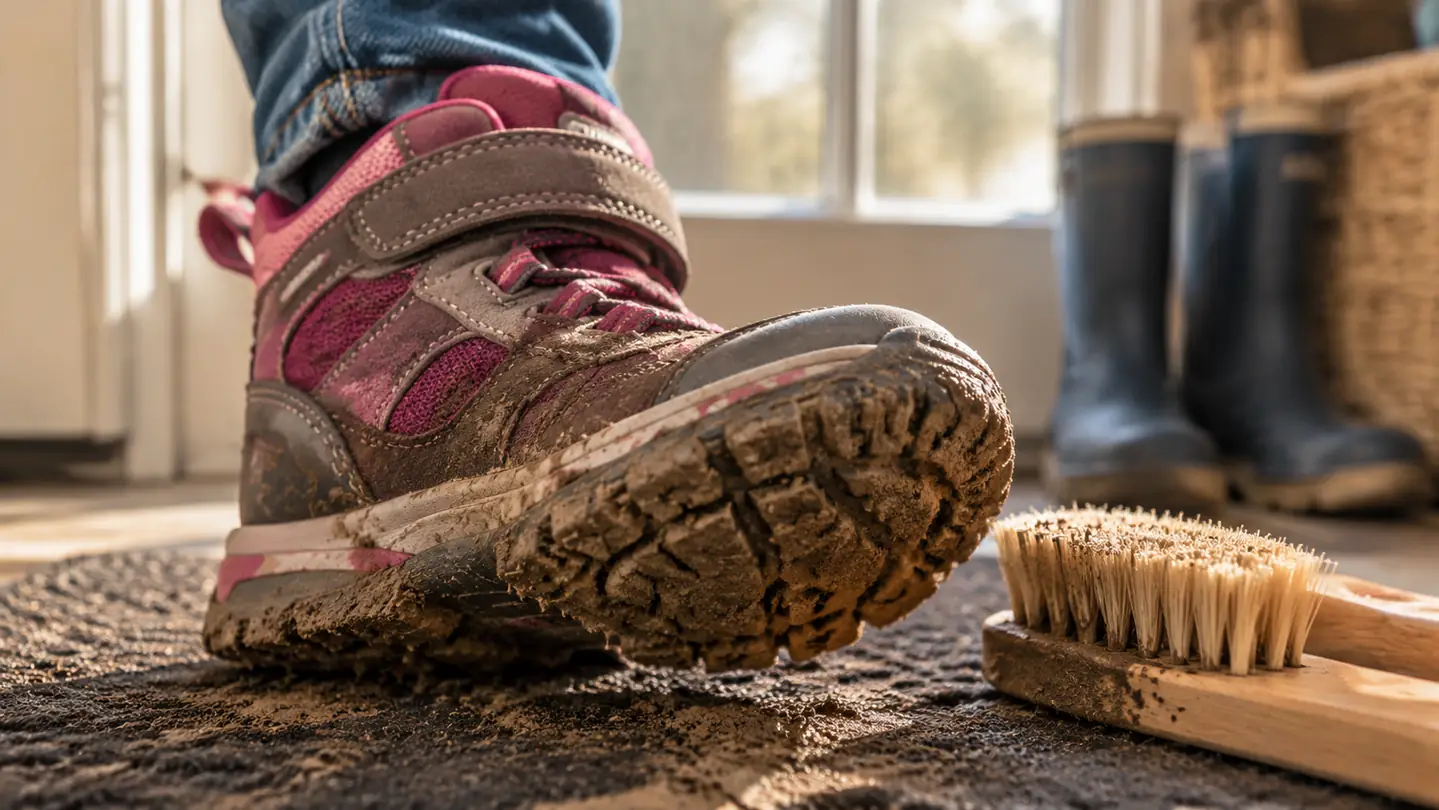
Clay mud is the other trade. The tread has deep enough lugs to pack with mud, and our clay is the kind that sticks. After a wet walk I knock the boots together and use a stiff brush. If I skip it, the mud dries in the tread and comes off in chips on the mat. That is not a defect. It is what a real tread does. But it is work, and I would rather tell you than have you find out.
One more thing about the wet day. Her pants got soaked in the April rain, because the rain jacket only covers the top half and she had no rain pants. The boots were fine. Her feet were dry. The rest of her was wet and laughing. I include that because a boot can only do so much. If you hike in rain, the boot is not the whole system.
What Has Held Up After Eight Months
After about thirty Saturdays, the boots look used. The leather has creases across the toe, the way leather does. The rubber sole is scuffed at the toe and heel. The strap still fastens, the bungee still has tension, and the waterproofing has not failed in ordinary wet weather. I have not treated the leather with anything. I wipe them with a damp rag when the mud is bad and let them dry by the door.
The inside is the part I check. The lining is fabric, and it has not torn or balled up at the heel. The insole has not slid forward. Hattie has not said the boot feels different inside. That is not a laboratory test. It is a grandmother's inspection on a mat by the back door. But it is the inspection that matters to me, because a boot that rubs is a boot that stays home.
Would I buy them again? Yes, in the next size, probably in the spring. I would buy them for the same reason I bought them the first time. They keep her feet dry, they grip wet rock, and she can put them on without me kneeling in the driveway. The weight and the mud are real. So is the dry sock. I will take that trade on a wet Saturday.
The one maintenance habit I have is drying them by the door, not on the heat register. I made that mistake once with a pair of my own boots years ago, and the leather stiffened. These have only been on newspaper overnight, never on a radiator. If you take one thing from this, take that.
What I Liked
- Hattie can fasten the hook-and-loop strap and bungee herself
- Waterproof enough for wet limestone, puddles and one creek over the top
- Grip held on wet rock and roots
- No blister after two short break-in walks
- Ankle height and a rubber sole gave support on uneven ground
Where It Falls Short
- Heavier than sneakers, which an eight-year-old will notice at first
- Clay mud packs into the tread and needs a stiff brush
- Not a wading boot, and a soaked boot takes overnight on newspaper to dry
- She will outgrow them by spring, so plan for one school year of wear
Who This Is For
These are for the child who is already walking two or three miles on real ground and needs dry feet and grip more than she needs a light shoe. They are for the parent or grandparent who is tired of turning back because of wet socks. They are for a child who wants to do the strap herself, because that independence is half of getting out the door.
If you hike the way we do, once a week, on surface trails, in wet spring and hot summer and cool fall, these boots are the simplest piece of gear I bought in that February order. They did not need a break-in period beyond two neighborhood walks. They did not cause a blister. They did not leak in ordinary wet weather. That is a low bar, and most children's sneakers do not clear it.
Who Should Skip It
Skip these if your child only walks paved paths, if she is not yet used to a heavier shoe, or if you are not willing to brush mud out of a tread. A lightweight trail shoe will be easier for a small child on flat ground. The Merrell Chameleon is a boot, and a boot is more than a small child needs for a sidewalk.
Skip them if you expect one pair to last two years. Hattie is eight. She has worn these for about thirty Saturdays, and she is already down to half a thumb at the toe. Children grow. A boot that fits in March may not fit in March. Buy for the season you are in, not for some future hike you have not planned.
Skip them if you are looking for a rain boot. These are waterproof hiking boots. They are not submersible. If your child's idea of a good time is stomping through a creek, you want a different boot and a pair of wool socks. The Merrell boots did fine with one accidental creek over the top. I would not sign them up for that every week.
If your Saturday keeps ending at the first wet rock, start here
The Merrell Chameleon boots are what Hattie has worn for about thirty Saturday walks since March. They are waterproof, ankle high, and she can fasten them herself. Check the current sizing on Amazon before you order, because kids' feet do not wait.
Amazon Check Sizing on Amazon →