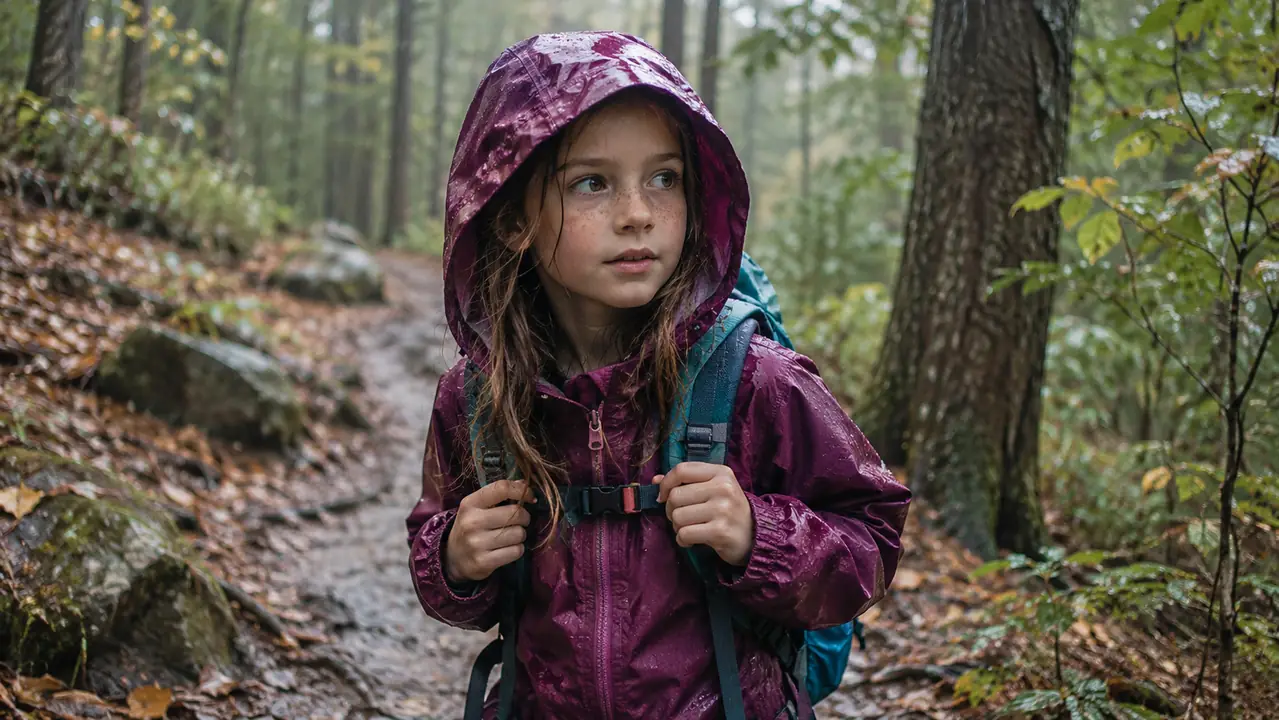
Here is the thing I would want another grandmother to tell me before she loses an evening to rain jacket listings: the Columbia Youth Glennaker Rain Jacket is a shell. Not a jacket that happens to have a shell. A shell. It keeps rain off the outside of a child, and it does nothing whatsoever about that child being cold, and on a raw wet morning it can leave her colder than she started because there is no lining, no fill and nothing inside it holding heat. I have had one on my granddaughter Hattie since the first Saturday of March, call it thirty Saturdays, and that single fact explains nearly every good thing and every complaint I am about to write down.
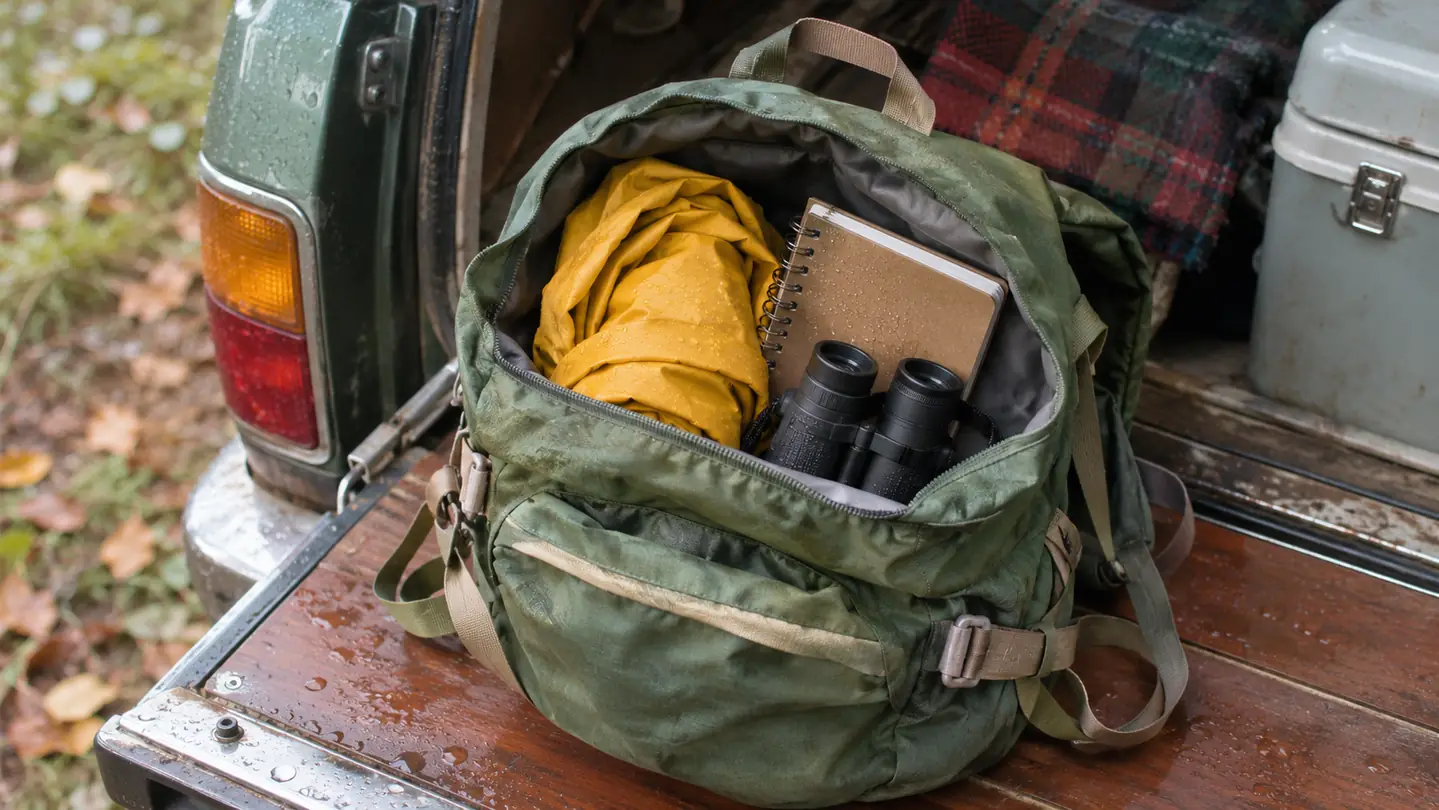
The backstory matters only because it is why I bought the thing. In February I took Hattie to Mammoth Cave in her old sneakers, with a leaky plastic bottle rolling around in my tote and a thin poncho that tore on a branch about a mile in. She ended up with wet socks and a blister on her left heel and we turned around early, and I drove home annoyed at myself rather than at the weather. That night I sat at the kitchen table and ordered five things in one Amazon order. The jacket was fifth on the list. It was the item I thought about least and the one I have reached for most often since, mostly without thinking about it at all.
The Quick Verdict
A genuinely dry shell that rolls small enough to live in the pack. Not warm on its own, clammy on a mild wet day, and the hood needs a hat under it. Buy it as a layer, not as a coat.
Amazon Check Today's Price →The one thing in the pack she never notices until it rains
100 percent nylon shell with a hood, a zip front, two slant pockets and long sleeves. Machine wash, regular fit. It rolls into the main compartment of a small kids pack and stays there all season.
Amazon Check Today's Price on Amazon →What It Is, Plainly: A Shell
The listing calls it a rain coat, and the material is 100 percent nylon. There is a hood, a zip front, two slant pockets, long sleeves and a regular fit, and it goes in the washing machine. That is the complete inventory of parts. There is no fleece inside, no quilted layer, nothing that traps body heat. Columbia built a barrier against water and then stopped, which is a perfectly sensible thing to build and an easy thing to misread at ten at night when you are scrolling past photographs of cheerful children in the rain. The word coat does a lot of quiet work in a product title, and I would like it to do less.
The listing also notes mild weather as the climate it suits, and after eight months I would call that fair. It is at its best on a wet morning somewhere in the fifties or sixties. Warmer than that and she gets clammy inside it. Colder than that and she needs something underneath that I have to remember to pack. I have forgotten twice. Both times I heard about it in the car on the way home, at length, from the back seat.
The layering fix is simple and I want to spell it out because it took me most of a spring to get consistent about it. She wears a fleece or a wool base layer, and the jacket goes over the top. On a wet morning in the forties that pairing has kept her comfortable for two and a half miles without a word of complaint. On a similar morning with only a t-shirt underneath she was cold inside twenty minutes and said so repeatedly and with feeling. Same jacket, same weather, entirely different child. That is the whole buying decision in one comparison, and it is not a flaw in the jacket. It is what a shell is for.
Before this I tried the obvious wrong things, and I would like to save somebody the same two months I spent on them. The first wet morning I sent her out in her puffy winter coat, which is wonderfully warm and which soaked through at the shoulders in about ten minutes and then hung off her like a wet dog for the rest of the walk. The second attempt was yet another poncho, which is cheap and light and flaps and tears. What I actually needed was the plainest thing on the shelf: a thin nylon layer with a hood, a zip, two slant pockets, and nothing inside it. That is what Columbia sells here, and it took me two bad mornings to stop hunting for something more complicated than that.
How It Has Held Up Over Eight Months
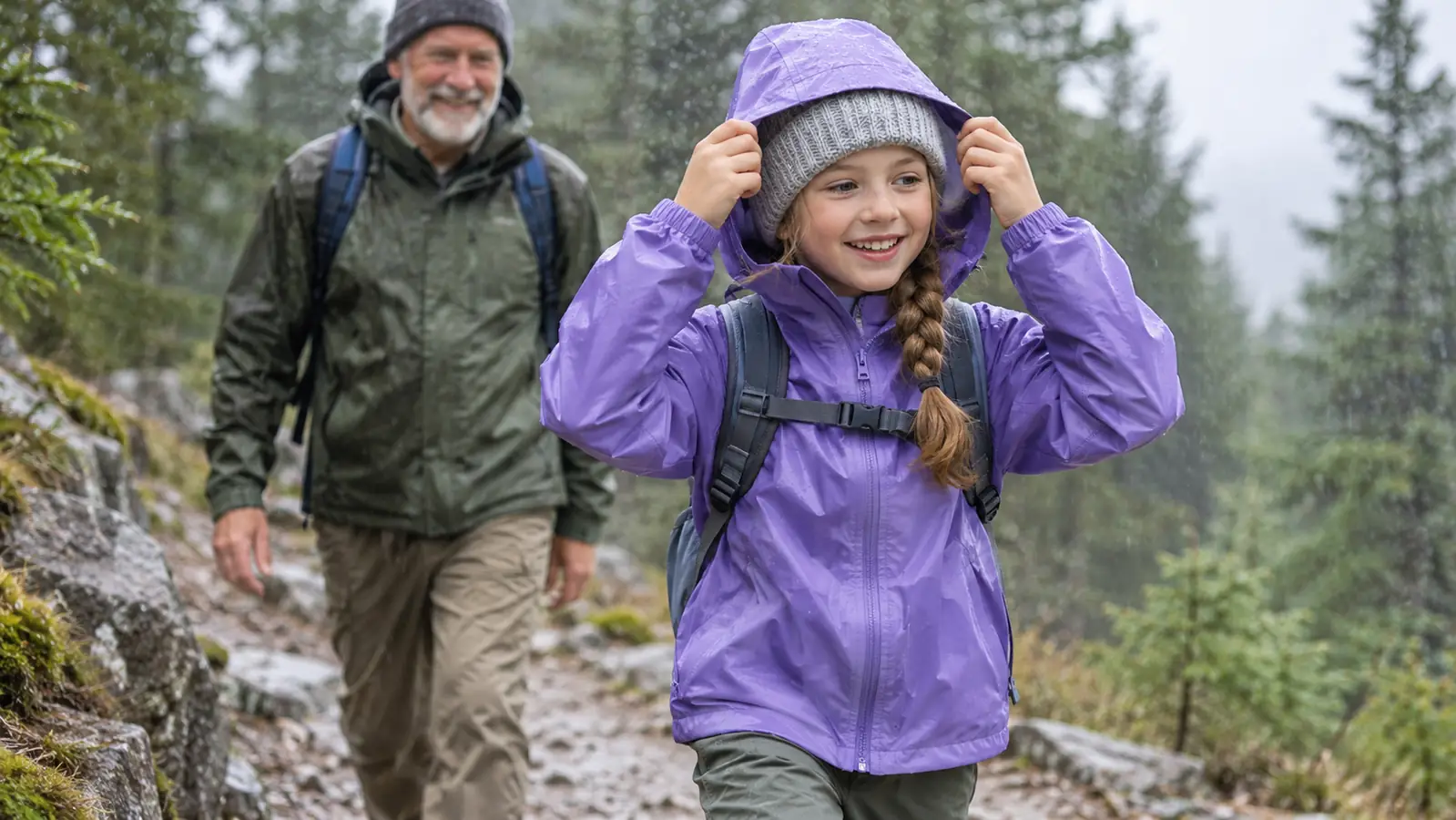
The jacket lives on the hook by my back door, underneath her pack, and it goes into that pack on every Mammoth Cave walk whether the forecast mentions rain or not. That is not me being diligent. It is that the pack has a main compartment with room to spare and this thing rolls small enough to vanish into it. A jacket that rolls up small gets carried. A jacket that does not gets left in the car and thought about regretfully at the trailhead.
In eight months of Saturdays it has been rained on, stuffed away damp, hung on a hook to dry, and washed in the machine with the rest of her clothes more than once. The zip still runs cleanly from the collar to the hem. The hood still sits where it should. I can find no tears, nothing has stiffened up, and the shoulders have not gone shiny where the pack straps press. Her old poncho lasted about a mile before a branch took it. This has lasted thirty walks and shows no sign of quitting.
I wash it on a normal cycle with her jeans, maybe once a month, and hang it on the hook to dry rather than putting it near the dryer, which is my habit with anything that has a hood and a zip. It has come out the same shape every time. The one thing I have learned is not to leave it balled up damp in the pack overnight. Twice I have done that, once in May and once in August, and both times it smelled like a wet basement by morning and wanted a wash it would not otherwise have needed. That is not the jacket's doing. It is mine, and it is worth knowing before you do the same thing twice.
I want to be careful not to oversell the durability, because I have not put it through anything unusual. It has not been worn to school, it has not gone sledding, it has not been handed down to anybody or left in a hot trunk all summer. It is one jacket, worn one morning a week, by one eight year old. That is the entire test and I will not pretend otherwise. It has passed without drama, and I have no particular reason to think a harder test would break it, but a hope is not a result.
What I Liked
- Kept her top half dry through twenty five minutes of steady rain
- Rolls small enough to live in the pack without anyone noticing it
- Hood, zip front, two slant pockets, long sleeves, machine wash
- Bought a size up, so a fleece fits underneath without pulling at the shoulders
- Eight months of Saturdays with no tears, no failed zip and no stiffening
Where It Falls Short
- Not insulated at all, so it is genuinely cold on its own
- Gets clammy against the arms on a warm rainy day
- The hood is loose and slides around without a hat under it
- Sleeves run long on a child when you size up, and she notices
- You have to remember the fleece, and I have forgotten twice
The One Real Downpour
We have had exactly one proper soaking, a Saturday in late April at Mammoth Cave. The rain arrived about a mile from the car with no warning at all, the way it does there, one moment the leaves are rattling and the next the trail is running like a gutter. We turned around without discussion. It took us roughly twenty five minutes to walk back.
Her top half stayed dry. Her hair under the hood stayed dry. Her jeans were soaked through in about four minutes, because I had not bought rain pants and had not thought about it once, and the water ran straight off the jacket and onto her legs. She laughed the entire way back. I would like to think that is a good sign about the jacket. It is more likely a good sign about the child.
Two details from that day are worth keeping. The first is that the water ran off the outside of the sleeves rather than soaking in, and when we reached the car I shook the jacket out once and most of it went onto the gravel. The second is the hood. She had a knit hat on that morning, which is the only reason the hood stayed where it belonged, and I have thought since about what that walk would have looked like without it. She would have spent twenty five minutes pushing a wet flap out of her eyes, and we would have been slower and crosser and probably louder about it.
I have turned that walk over in my mind a lot since, and what I take from it is narrow but real. The jacket did the one job it advertises. It did not leak through the shoulders where the pack straps sit, it did not wick water up the sleeves to her elbows, and it did not turn into a wet rag flapping around her in the wind. Twenty five minutes of steady rain is not a monsoon. It is enough that I stopped wondering whether the thing works, and that is worth more to me than any five star average.
Her top half was dry after twenty five minutes of real rain. Her jeans were soaked, because I forgot rain pants. That is the entire test result, and the jacket passed it.
The Things I Do Not Love
On a warm rainy day it gets clammy, and that is the complaint I would lead with if a friend asked me in the driveway. In June we had a muggy drizzle at Lost River, warm enough that she did not want anything on at all, and by the end of the loop the inside of the jacket was damp from her own effort rather than from the sky. A shell that keeps water out also keeps water in. Nobody puts that on the label, and every one of these garments does it, so it is not a mark against Columbia specifically. It is still the thing she complains about.
The hood is loose on her without a hat underneath. It sits back off her forehead and slides forward, and she spends half the walk pushing it out of her eyes with a wet hand, which is its own small misery. With a thin knit hat under it the hood stays put and everyone is happier. That is a minor design detail that turns into a large mood problem over two miles, and it took me three wet mornings to work it out.
The sleeves run long. We bought a Youth Medium on purpose, one size up, so that a fleece would fit underneath without pulling the shoulders tight, and I would make the identical choice again tomorrow. But long sleeves on a child mean fabric hanging past her hands, and Hattie tugs at them constantly. If you buy true to size you will not have that annoyance, and you also will not have room for a layer, and then you have bought a jacket for one season and not two. You are picking which annoyance you can live with.
There is one more small thing, and it is the kind that only surfaces after a few months of steady use. The two slant pockets are shallow enough that a folded tissue or a small treasure goes in and stays, but anything with real weight works its way forward when she leans over. She lost a particularly good acorn that way in September, and we held a short service for it on the tailgate before we drove home. That is not a reason to avoid the jacket. It is a reason not to hand a child anything valuable to carry in a slant pocket on a walk where she will bend down forty times.
Fit and Sizing Notes
The listing calls the fit regular, and on an eight year old of average build that reads true. It is not boxy and it is not trim. There is room through the middle for a layer, the shoulders sit roughly where shoulders ought to sit, and the zip does not gap when she bends over to look at something on the ground, which happens roughly every ninety seconds on a trail. The only place it runs generous is the sleeve, and that will be true of nearly any jacket you buy a size up for a growing child.
She is in a Youth Medium now with a fleece under it and there is still a little room at the bottom. I expect this to carry her through next spring, at which point the sleeves will either have become exactly right or she will have outgrown the whole thing. For a child sitting between sizes, I would go up rather than down. A jacket with no room for a layer is a jacket for one narrow band of weather, and children do not stay in one band for long.
Who This Is For
This is for the parent or grandparent who already understands layering, or who is willing to learn it in one wet morning and a little back seat commentary. It suits a child of roughly five to twelve who walks two or three miles in mild weather and needs to stay dry without being bundled into something puffy and stiff. It suits a pack, a car door, and a hook by the back door. If you are hoping for one garment that handles a cold November rain by itself, this is not that garment, and no shell of this kind is. Buy the layer that goes under it in the same order and you will be fine.
Who Should Skip It
Skip it if you are shopping for warmth. Skip it if your child runs hot and cannot stand the feel of nylon against bare arms on a muggy day, because that clammy feeling does not go away once the walk gets going. Skip it if you know perfectly well you will not remember the fleece, since on a cold wet morning this alone will leave a child shivering and cross and the jacket will take the blame. And skip the size up if you are not actually going to use the extra room, because long sleeves hanging past a child's hands are their own small daily sorrow, and only you know whether your child will tolerate it.
Dry is a small thing until it is the only thing
Eight months, about thirty Saturdays, one real downpour, top half dry. The Columbia Glennaker is a layer and not a coat, and once you pack it that way it earns its hook by the door.
Amazon See the Columbia Glennaker on Amazon →