Short answer: if the child walks most Saturdays and needs a shell with room for a fleece underneath, the Columbia Youth Glennaker is the one I would buy a second time. If you need a single jacket that lives in a school bag and handles a wet walk to the bus stop, the Switchback II is the lighter and simpler of the two and I would not talk you out of it. I have walked behind the Glennaker for about eight months. I have handled the Switchback II on a store rack and read its listing twice, and that is the whole of my evidence. I will keep it straight all the way down the page.
Both of these are Columbia shells, and the word shell is doing real work in that sentence. A shell is not a coat. Neither jacket has warmth built into it. What it does is keep rain off whatever you have put underneath, which makes the fleece question more important than the fabric question. If you are shopping for a jacket to keep a child warm on a cold morning, you are shopping for a different garment and no brand name will rescue that. I bought the Glennaker for my granddaughter Hattie last February, after a Saturday at Mammoth Cave went badly enough that I came home and sat at the kitchen table with my tablet.
| Columbia Glennaker | Switchback II | |
|---|---|---|
| What it is | Nylon shell, hood, zip front, two slant pockets | Nylon shell with a hood and a zip front |
| Warmth on its own | None. It is a shell. | None. It is a shell. |
| Room for a fleece underneath | Regular fit, roomy enough one size up | Not something I could judge on a hanger |
| Weight and bulk in a small pack | Rolls up, but takes a real share of a 3.5 L pack | The thinner and lighter jacket of the two |
| Walk to school | Reads as a trail jacket first | The plainer jacket that slides into a school bag |
| A steady downpour | Twenty five minutes, top half dry | Not tested by me |
| Care | Machine wash, cold, hang to dry, held its shape | I did not check the care label on the other one |
| Best for | A child who walks most Saturdays and layers a fleece under it | A child who needs one jacket for school and town |
How the Glennaker Ended Up in the Pack
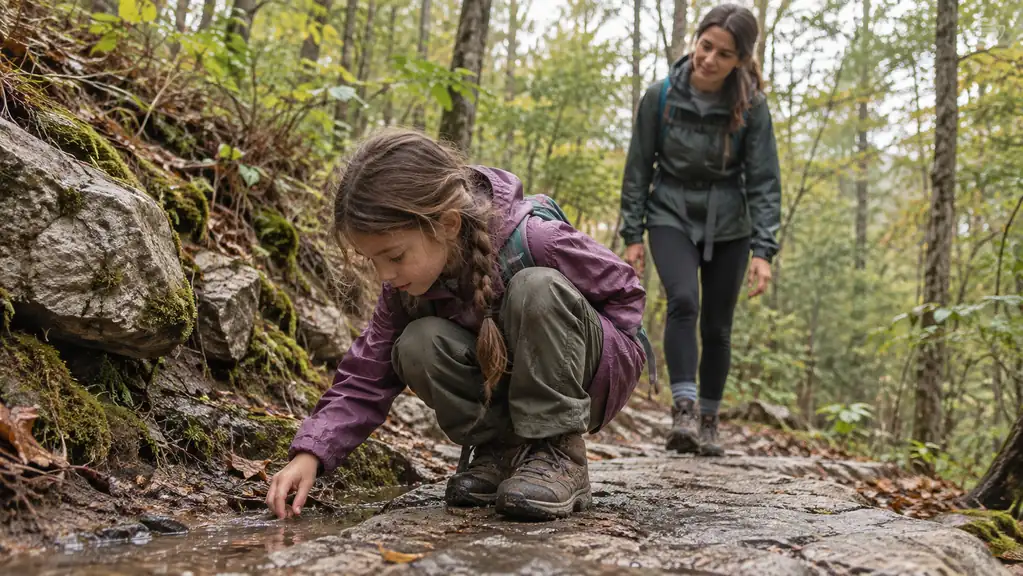
In February I took Hattie to Mammoth Cave in her old sneakers. I carried a leaky plastic bottle loose in my tote and a thin poncho I had been hauling around for years. The rain came, the poncho tore on a branch about a mile in, her socks were wet through, she had a blister coming on her left heel, and we turned back. She did not complain much, which was somehow worse than if she had. That night I ordered five things in one go: a pack, boots, binoculars, a bottle and the Columbia jacket. They arrived within the week and none of it has been replaced since.
I ordered the jacket a size up on purpose, Youth Medium, because I wanted a fleece to fit under it in cold weather. The sleeves ran long that first spring and they are about right now. I would rather have long sleeves than a jacket she has outgrown by November, and I will say the same thing to anyone who asks me in a shop.
Since then it has ridden rolled up in the main compartment of her pack on every Saturday walk, about thirty of them, March through this fall, in drizzle, in heat and in the one real downpour. It goes in whether the sky looks threatening or not, which is the only rain habit that has ever worked for me.
What the Glennaker Does on a Wet Saturday
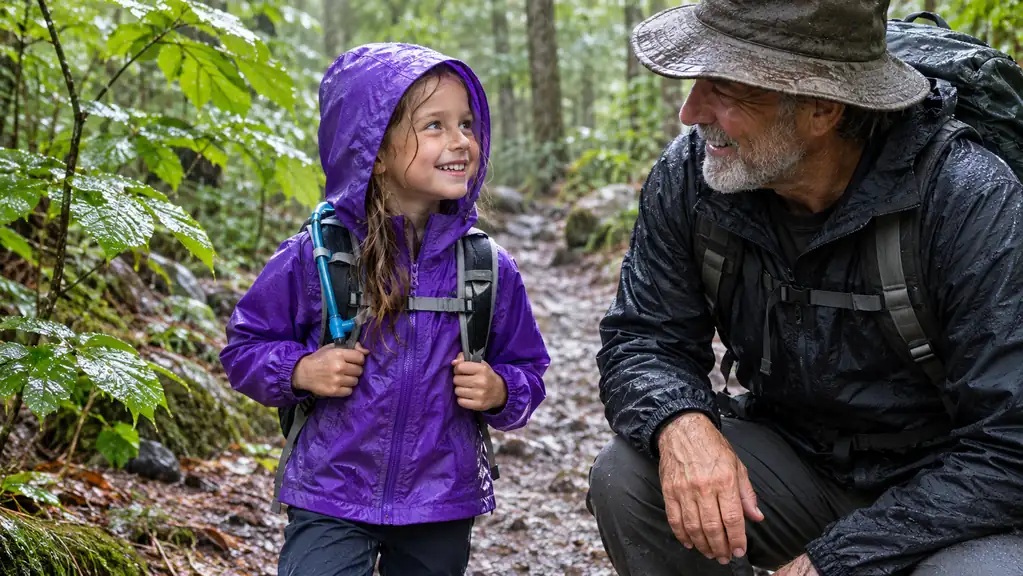
The one real downpour was a Saturday in late April at Mammoth Cave. The rain arrived when we were about a mile from the car and it meant it. We walked back in roughly twenty five minutes and her top half stayed dry. Her trousers were soaked, because I had not bought rain trousers and still have not, and she laughed the whole way back, which was not the reaction I was braced for. That walk is my only evidence in heavy rain. Everything else has been ordinary drizzle, and I am not going to dress drizzle up as a storm.
It does two things badly and you should hear both. On a warm rainy day it gets clammy inside, because nylon does not breathe much and there is nothing between her and it. And the hood is loose on her head without a hat underneath, so it slides forward over her eyes until she shoves it back, which rather defeats the purpose. A thin wool hat under the hood fixes the second problem. I keep one in the pack from October onward.
The listing is worth a word of caution. It calls the jacket waterproof in one line and lists a water resistance level of not water resistant in another. I cannot explain that contradiction and I am not going to pretend I can. What I can tell you is what happened on that April walk, and what has happened on thirty ordinary wet Saturdays since. It also files the jacket under mild weather and fall, which strikes me as honest. Nobody at Columbia is claiming this is a winter coat.
The Layer Question, Which Is Really the Whole Question
A rain shell for a child is a layering decision wearing a jacket's clothing. In March Hattie has a thin fleece under it. In May she has a cotton shirt and nothing else. By October the fleece is back. A jacket that makes that easy is worth more than a jacket that might be better in a downpour but will not close over a fleece, and that is why I keep coming back to buying a size up even though the sleeves looked silly for a season.
It is also why I would not buy a heavier rain jacket for a child this age. Heavier means warmer, and warmer means it gets worn for three weeks in April and then becomes a misery in June. A shell plus whatever the morning calls for stays useful across three seasons, because the jacket is not the part doing the warming.
The one thing I would not do is buy the Glennaker to be the only warm thing a child owns. It is not that. On a cold dry morning it is a windbreak with a hood, and if a child goes out in it in November with a t-shirt underneath, everybody has a bad time and the jacket gets blamed. That is not a fault in the jacket. It is a fault in the shopping list.
Where the Glennaker Wins
The first win is room. The fit is listed as regular, and a size up leaves enough space at the shoulder for a fleece without pulling, so the same jacket covers a cool morning in October and a mild wet one in May. When a child grows the way Hattie grows, a shell with room in it does the work of two jackets and spares you a second purchase in the same year.
The second win is that I know exactly what it does. Two slant pockets hold a small bag of trail mix and a folded tissue, which at eight years old is the correct size of pocket. The zip front is easy enough that she runs it herself. The label says machine wash and means it. Mostly, though, the win is that April walk. Twenty five minutes of steady rain and a dry shirt underneath is the whole argument, and I happen to have it in hand.
Where the Switchback II Wins
The Switchback II wins on bulk, and it is not close. The Glennaker is not a small jacket once it is rolled. It takes a real share of a kids pack that holds about three and a half litres of cargo, and on a hot morning when rain looks unlikely I have left it in the car and regretted it by lunchtime. The Switchback II is the thinner and lighter jacket of the two on the rack, and for a child who feels every ounce on her shoulders, that is worth something.
It also wins on the school run. The Glennaker reads as a trail jacket first and it looks like one. The Switchback II is the plainer jacket of the two, the one that slides into a school bag on a Tuesday and does not need a Saturday to justify itself. If a child needs one jacket for the bus stop, the playground and the path into town, the simpler and lighter one is the sensible answer, and I would say so in the shop.
The jacket I would buy a second time
Nylon shell, hood, zip front, two slant pockets, machine wash. It is the layer that goes over the fleece, not instead of it. Go one size up if a fleece will live under it.
Amazon Check Today's Price on Amazon →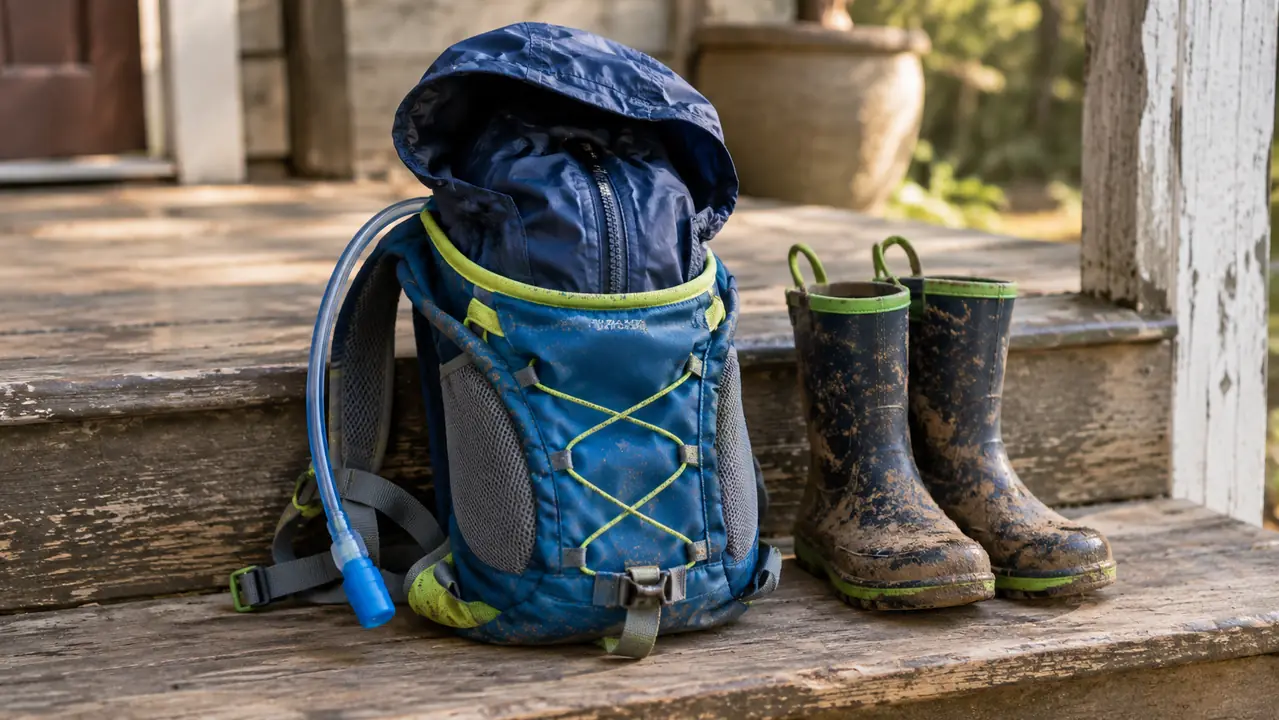
Care, and the Small Annoyances
The care label says machine wash, and I have machine washed it, cold, and hung it on the porch rail to dry. It has held its shape and its surface. I did not check the care label on the other jacket, so I will not pretend to compare them on that point. The hood remains the small annoyance. Without a hat under it, it flops forward and she pushes it back, and then rain finds her neck anyway. If I were Columbia I would take an inch out of it.
What I Could Not Check on a Hanger
I want to be plain about the limits of this comparison. I have not walked a mile in the Switchback II. I have held it in a shop, turned the hood over, looked at the seams, read the listing twice and put it back on the rack. Everything I have said about it comes from that and from the published description, not from a wet Saturday. It is a thinner kind of knowledge than eight months of use, and you should weigh it that way.
What a hanger cannot tell you is the two things that decide a children's rain jacket. The first is whether a fleece will fit underneath without pulling across the shoulders. The second is whether the hood stays up when the child turns her head to look at something. Both need a child inside the jacket, and both take about ninety seconds in a shop if you bring the fleece with you.
If you can get to a store, put the fleece on the child first, then the jacket over it, then have her look left and right and up. If the hood falls back on its own, that jacket will be a fight every wet morning. If the shoulders pull, go up a size. That test will tell you more than any listing, including mine.
Sizing and the Next Size Up
Hattie is in a Youth Medium, bought a size up on purpose, and the sleeves still run a little long. The shoulders still sit where they should and the hem still covers the waistband of her trousers, which is the part that matters in rain. My guess is she gets this winter out of it and we go up a size in the spring. A shell that lasts two winters of Saturday walks is a fair run for any children's jacket.
If a child is between sizes, go up. The sleeves look long for a season and then they do not. If you are buying in October for a child at the top of a size, buy the next one up and put the fleece under it now rather than later. The fit is regular, and regular with a fleece underneath is a size up in practice.
Who Should Buy Which
Buy the Glennaker if the child walks with you most weekends, if you want a shell that layers over a fleece, and if you would rather own one jacket you have watched work than two you have only read about. Buy the Switchback II if the jacket's main job is the walk to school and the occasional wet path in town, if pack space is tight, or if a child will not tolerate anything bulky on her back. Neither is a bad jacket. They are the same idea cut for slightly different Saturdays, and only you know which Saturday you actually have.
Thirty Saturdays, one downpour, and it is still the jacket in the pack
If your Saturdays look like ours, this is the shell that goes in the top of the pack, with a thin wool hat in the pocket for the hood.
Amazon Check Today's Price on Amazon →