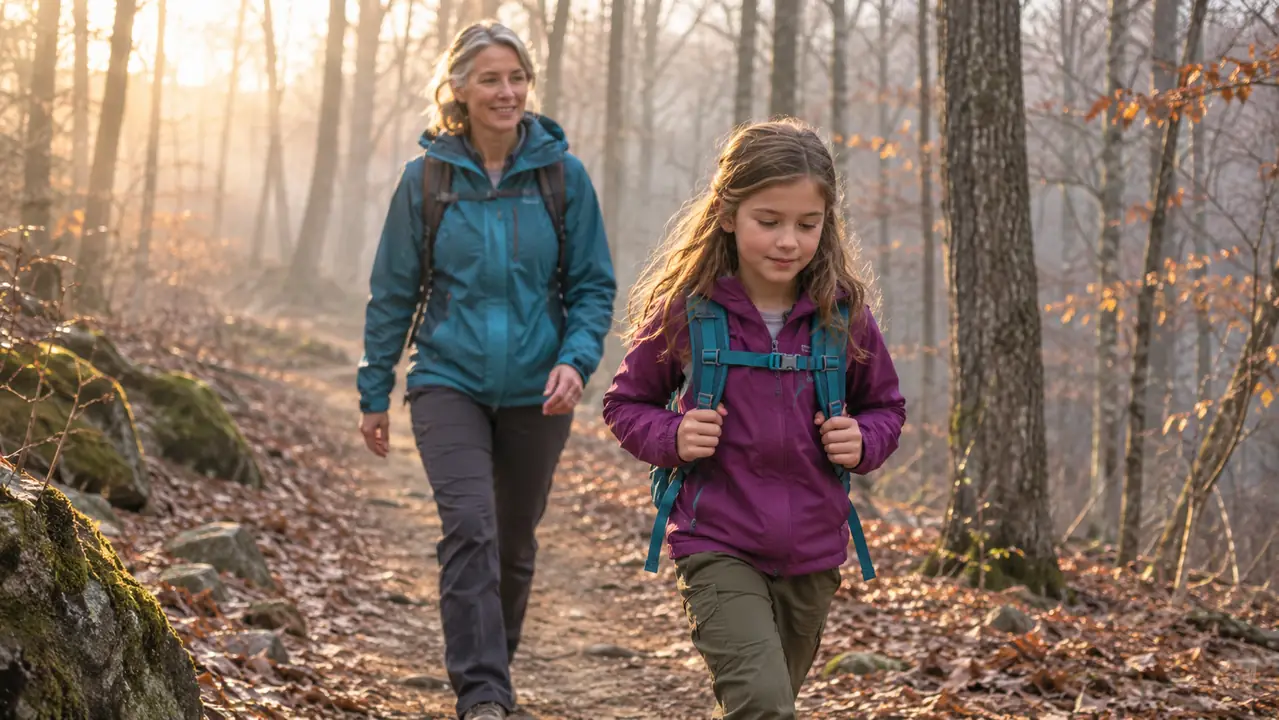
The water bottle is the piece of gear parents buy last and regret first. I know because I did. In February I took my granddaughter Hattie to Mammoth Cave in her old sneakers, with a leaky plastic bottle rolling around loose in my tote bag. She was eight. We made it about a mile. She stopped every few minutes to ask me for a drink, I had to dig the bottle out and hold it for her while she drank, and by the time we turned around her socks were wet through and a blister was starting on her left heel.
That night I sat at the kitchen table and ordered five things in one Amazon order: a pack, boots, binoculars, the Owala FreeSip Kids 16 oz bottle, and a rain jacket. All five have been in use since the first Saturday in March, so that is about eight months and roughly thirty Saturdays of walking. What follows is what I have learned about picking the bottle, and where the Owala fits and where it honestly does not.
The bottle that lives in my car, not in the pack
Sixteen ounces, insulated stainless steel, a push-button lid an eight year old can open one-handed, and a carry loop that doubles as a lock. This is the bottle I hand Hattie for short walks, the ride home and school.
Amazon Check Today's Price on Amazon →How to Pick a Kids Water Bottle for Hiking
Step 1: Decide what the bottle actually has to do before you shop
Most parents I talk to are shopping for one bottle to cover everything, and that is where the trouble starts. A bottle has at least three jobs in a walking family: water during a long walk, water in the car and at the trailhead, and water at school. Those jobs do not want the same object.
Our long walks are two to three miles at Mammoth Cave, sometimes two hours. Hattie's water on those walks comes from the reservoir in her pack, and the Owala stays in the Forester for the ride home. Our short walks at Lost River Cave are under an hour, and that is Owala weather. So is the car, so is the lunchbox on a Tuesday.
So before you look at a single bottle, write down the length of your usual walk. If you regularly go past an hour with a child, a bottle in a side pocket is not going to be enough, no matter how good the bottle is, and you should be shopping for a small pack with a reservoir instead. If your walks are forty minutes around a nature center, an insulated bottle with a carry loop is simpler, cheaper to live with, and easier for a child to manage alone.
Here is how I actually worked it out, and you can do the same thing with a watch and no equipment. I timed our usual Lost River loop twice, with a kitchen timer in my jacket pocket, and both times we were back at the car in under forty five minutes, counting the stop to look at a mushroom. That is a bottle walk. Then I timed a Mammoth Cave morning and we were out two hours and ten minutes, and there is no bottle on earth that an eight year old carries for two hours without it becoming a chore. Write your own two numbers on the back of a grocery list. You will only have to do it once, and it settles the question faster than any review you will read.
Step 2: Get the drinking mechanism right for small hands
A child who has to stop, unscrew a cap, hold the cap somewhere, drink, and screw it back on will hand you the bottle instead. That is what the old plastic bottle taught me. Every stop cost us two minutes and a small argument.
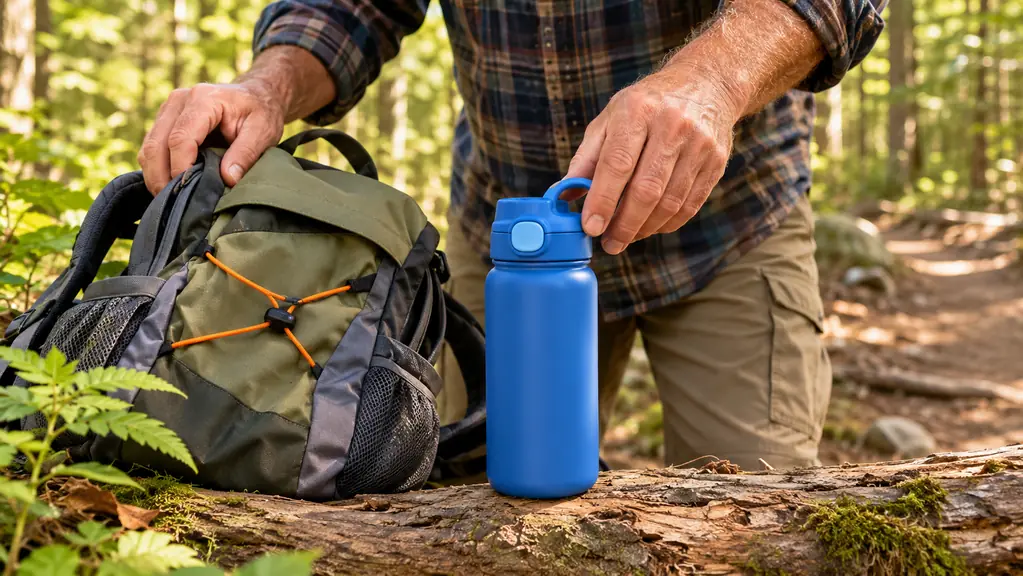
The Owala has a push-button lid and a FreeSip spout that lets a child either sip upright through the built-in straw or tilt the bottle back and swig from the opening. Hattie settled on the straw and drinks while she walks. On the very first Lost River walk she stopped asking me for water, and I did not prompt her once. The button was stiff for her thumbs for the first couple of weeks. By April she could work it without looking.
The lid detail I have come to care about most is the carry loop, which doubles as a lock. We have had exactly one leak: a June afternoon when Hattie left the lid unlocked and the bottle tipped over in the Forester cup holder, and I found a small puddle under it. Locked, it has never leaked, including three months of riding loose in the car. If you are choosing between two bottles and one has a lock on the lid and the other does not, take the lock.
One thing I would look at in a store before buying is where the button sits when the bottle hangs from its loop. Hattie carries the Owala by the carry loop at her side and presses the button with her other hand, and the arrangement took a couple of Saturdays to feel natural. She has not asked me to open it for her since April. That is the test I would apply to any bottle on a shelf: hand it to the child closed and see how long it takes her to get a drink without being coached. Under ten seconds, and you can stop shopping.
Step 3: Size it to the child, not to the label
The Owala is sixteen ounces, about 322 grams empty, and roughly 3.24 inches across by 8.84 inches tall. That width matters more than people expect. It sits in a car cup holder and in the side pocket of a small pack without a fight, and it drops into a school cubby.
Sixteen ounces runs out. On a hot July morning it comes home empty, and I refill it before we get out of the car at Lost River. That is not a flaw exactly, it is the trade you make for a bottle an eight year old can carry on her own. When I fill Hattie's pack reservoir I only put about half in it for the same reason. A full big bottle is just weight with a handle on it, and weight is what makes a child stop walking.
I measured once, out of curiosity, because I already had a ruler on the counter for a school project. The Owala stood beside the plastic bottle it replaced and the two were within a quarter inch of each other in height. What changed was not the size but the weight and the way it sat. The old bottle was light, rolled around, and tipped over every time I turned the car. This one is heavy enough to stay put in a cup holder, and setting it down on the picnic table at Lost River no longer ends with it on the ground. The test I trust now is simpler than a ruler: Hattie lifts it by the loop one-handed with her arm hanging down. If she has to use two hands and a hip, it is too big for the walk we are actually taking.
Step 4: Look at how it survives being dropped, because it will be dropped
In June Hattie dropped the Owala on the stone steps at Lost River. It landed on the base, bounced once, and skidded. There is one small dent near the bottom. It still works, the lid still seals, and it still holds cold. I have seen that dent every week since and I have stopped noticing it.
The insulation is double wall stainless, and the listing says up to 24 hours cold. I will not quote you my own hours, because a bottle in a warm car is not a laboratory. What I will tell you is that in July I put ice in it in the morning and there was still ice rattling around when we got home in the afternoon.
One more piece of evidence for the drop column. In August the bottle went off the edge of the same picnic table onto the gravel and rolled under the car. I got down on my hands and knees with the flashlight on my phone and fished it out, and the lid was still locked and the water was still cold. If a bottle is going to live in a child's hands on a rocky trail, it will land on rock eventually. Buy one you have already pictured dropping.
That insulation is also the reason to be clear about what this bottle is for. Cold drinks only, never hot. If you want one bottle to carry cocoa in January and water in July, keep looking, because this one is not built for that and Owala does not claim otherwise.
Step 5: Decide who washes it before you buy it
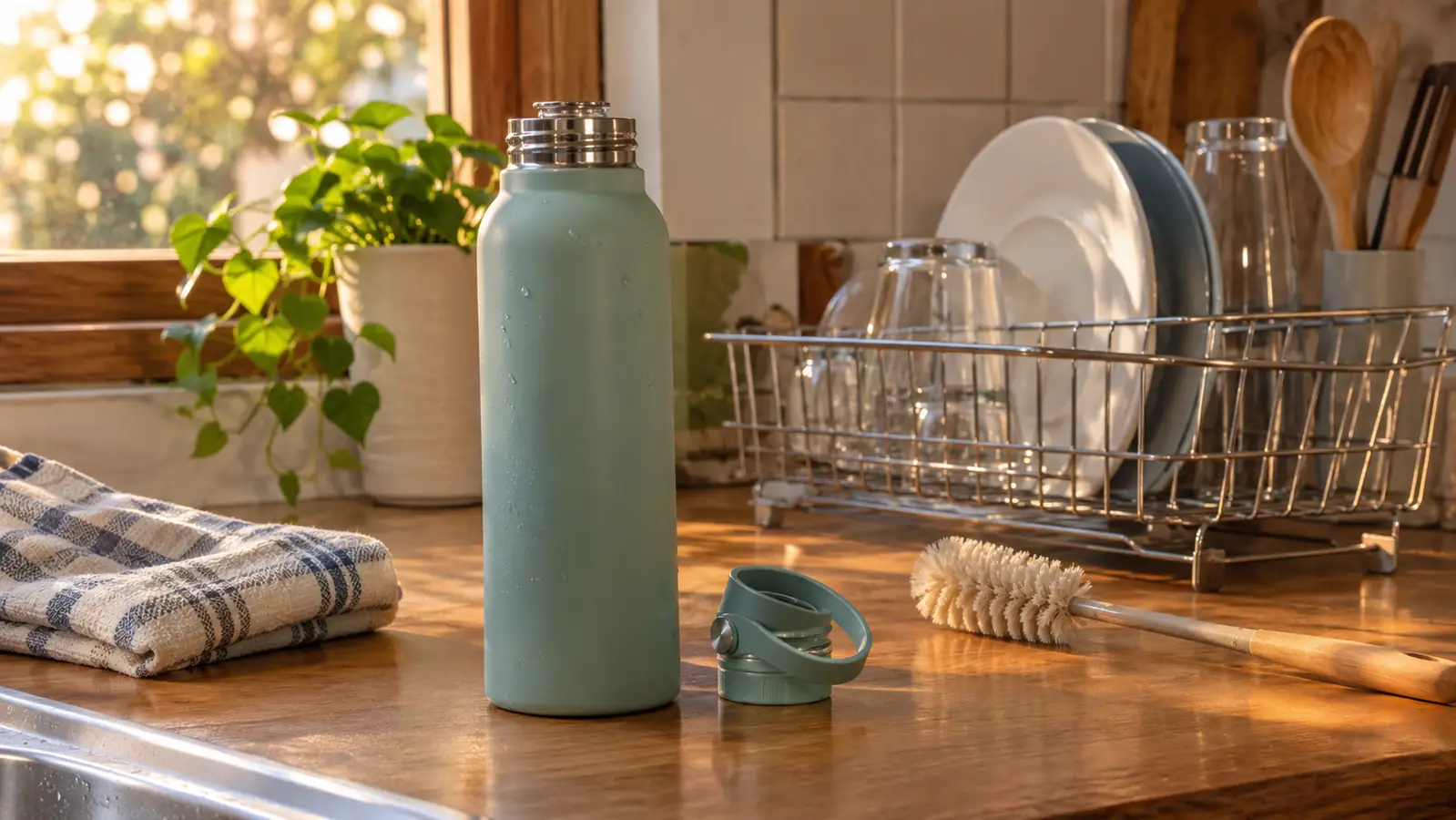
This is the step people skip and then resent. I wash the cup by hand and I put the lid on the top rack of the dishwasher, and that is now part of my Saturday evening. The wide opening makes both jobs easy, and it is also how a slice of lemon or a couple of ice cubes gets in there without a struggle.
If hand washing one cup every week would make you quietly angry at the bottle, do not buy an insulated stainless one, from Owala or anyone else. Buy something you can put in the machine top to bottom. A bottle that stays dirty in the cabinet is worse than the leaky plastic one, because at least the plastic one got filled.
One more small habit that helps, and it is not about the bottle at all but about the walk. I pack the night before. That means the reservoir propped open on the dish rack to dry, the jacket rolled into the pack, and the Owala filled and sitting in the door of the refrigerator. Packing in the morning with an eight year old in the room takes three times as long and I forget something every time I try it. Thirty Saturdays in, that is the change that has saved us the most time.
On the first Lost River walk she stopped asking me for water. I did not prompt her once. That is the whole test, and most bottles fail it.
What Else Helps
A bottle on its own will not fix a walk, and I want to be plain about that. The thing that ended the constant stopping at Mammoth Cave was the pack, because a reservoir she could sip from while walking meant her hands stayed free. The thing that ended the blister was the boots, which she broke in over two short walks around our neighborhood and which have not given her a blister since. The bottle is the piece that made the short walks and the car rides easy, and easy mornings are worth something.
Two other things have earned their place. Hattie keeps a spiral notebook of what she sees, started because I spent thirty one years trying to get children to look closely at things, and the binoculars ride in the pack. And the rain jacket lives rolled up in the pack whether the sky says rain or not. None of that is about water. But a child who is dry, warm, and not thirsty is a child who keeps walking, and those pieces work together.
If you take one idea from all of this, take the boring one. Match the bottle to the walk you actually take, most weekends, with the child you actually have. For a forty minute path and a car ride home, the Owala FreeSip Kids 16 oz has done everything I asked of it for eight months, with one dent and one unlocked puddle to show for it. For a two hour walk in the heat, no bottle in a pocket will do the job, and you should be looking at a pack.
Buy it for the walk you take most Saturdays
Sixteen ounces, double wall insulated, a lock on the carry loop, and a spout Hattie could work one-handed by the second week. It has been dropped, tipped, and filled roughly thirty times and it still does its job.
Amazon Check Today's Price on Amazon →